
Before you begin to iron anything onto your garment, please check what material it is made of. Patches can be ironed onto cotton, cotton blends, velour, denim and wool. For your safety, use a flat surface for ironing on a patch and follow any iron or patch instructions.
Tip: Cotton and polyester fibre blends work the best. Fleece blankets can be ironed on as long as you're careful and use a pressing parchment square or a thin cloth over the patch.
DO NOT apply iron-on patches to waterproof rainwear, rayon, nylon, velvet, acrylic, minky, leather, vinyl, or any other fabrics with finishes, elastics or heat sensitivity. If you're unsure, test with an iron on a hidden seam or hem to see if the fabric accepts the heat without damage.
Hand or machine sewing is recommended to permanently attach patches. The adhesive may not stick well on some fabrics or may peel off over time.
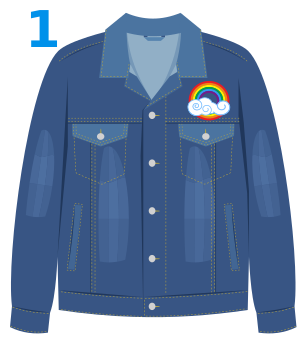
Preheat your iron to 350 degrees Fahrenheit (the cotton setting for about five minutes or until hot) and position your patch where you want it on the material.
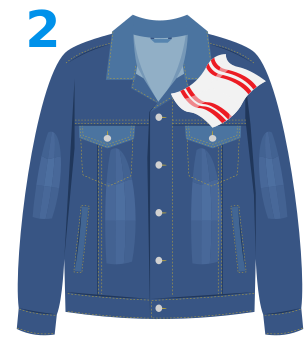
Place a pressing parchment square or a thin cloth over the patch. EPC TIP: Use a damp cloth when ironing wool or other delicate fabrics. Also, make sure the cloth is damp, not soaking wet.
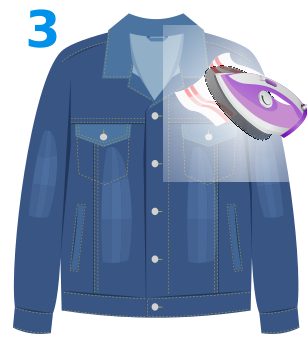
Place your iron onto the cloth on top of the patch and apply firm pressure for about 30 seconds. Allow material and patch to cool for five minutes.
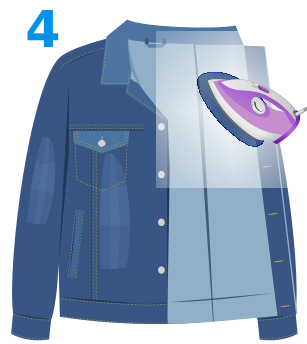
Next, turn your garment inside out and iron the area behind the patch while applying firm pressure for 30 seconds. This ensures that the patch is firmly attached. Allow the area to cool for another five minutes, and the iron-on process is complete.
We recommend using sewing and ironing together to firmly affix your patches. While ironing does attach the patch to your fabric, for a guaranteed permanent attachment, the patch should be sewn on. Don't worry! Sewing a patch on is just as easy as ironing, and with a little patience, anyone can do it.
First, attach the patch to the fabric. This can be done through a variety of methods, though we have found that applying painter's tape across one half of the patch can securely hold the patch in place. Alternatively, you can use straight pins to hold the patch in place. Though, some patches are quiet thick and can potentially bend your pins out of shape! If you do elect to use pins, try to find an area with just the twill or a large block of the same thread, as these areas are thinner and will allow the pin to pass through more easily. We do not recommend ironing on the patch and then sewing. The process of sewing flexes the patch, causing the adhesive to peel and break away from the fabric. Always iron your patches on after sewing them down.
Next, cut twice as much thread as you think you'll need, and thread it through the needle. Then carefully fold the thread over on itself and tie both ends together, creating a circle. This will strengthen the stitches and make it harder for them to unravel. Additionally, choose the thread colour you like the most. While we more often prefer to use a thread colour matching the border of the patch, as it blends into the stitches for a seamless look, complimentary colours make the stitches stand out, giving the patch application a handmade vibe. Ultimately, thread colour is up to you—have fun with it!
Finally, sew! Go around the patch with small, tight stitches that are close together—the more the better. Do not worry if you run out of thread while sewing, simply repeat the first step and keep going. When tying off thread, slip the needle between the back of the patch and the fabric, then out again, before cutting. This way the thread will be sealed by the adhesive when you iron-on the patch, or at least protected from unraveling if you are not ironing the patch down. We do not suggest doing this with peel-and-stick patches.
Tip! If you are sewing a peel-and-stick patch, use rubbing alcohol or warm, soapy water to remove the adhesive from the sewing needle when finished. Be careful and go slowly, as this can be dangerous! Our peel-and-stick patches are designed to stick around without sewing, so we suggest avoiding sewing them down whenever possible.
After you have finished sewing, we suggest ironing the patch, or applying fabric glue to the back of the stitches to strengthen the connection. Do not worry if your stitches break from wear, this is not uncommon! Simply restitch the patch when you are able to.
Thicker thread is recommended when sewing a patch onto a high-traffic area. Alternatively, you can go around the patch twice, to create a similar effect.
Tip! If the patch is difficult to sew through, we suggest carefully sewing between the threads of a patch by separating them using the tip of the needle. Alternatively, you can place the stitch further away from the border, as our flag patches, especially, tend to be thicker a millimeter around the border.
Whether you’re ironing patches on denim to ironing letters on clothes, follow these tips to ensure your patches are properly attached and last as long as possible.
Looking for alternative ways to attach your patches or extra guidance on ironing on patches? Check out our blog article Easy Ways To Attach Your Patches.
Or, perhaps you're searching for some unique crests to attach to your clothes. If so, why not...
Disclaimer: Epatches assumes no responsibility for the application of your iron-on, damaged fabrics, or any harm sustained while following these tips and iron patch instructions.
Subtotal 0
